Meeting NHS Standards with Nurse Call Technology
Delivering safe, responsive and high-quality care has never been more important for the NHS. In 2026, there is an increasing focus on things like meeting patient expectations, alleviating staffing pressures, encouraging compliance with existing standards and regulations, and meeting digital transformation targets. Modern nurse call systems are just one of the key pieces of healthcare technology that play a role in this pursuit of healthcare excellence, and today’s systems should be built with the implicit purpose in mind of helping healthcare organisations to meet these NHS standards and Clinical Governance objectives.
As one of the UK’s leading manufacturers of nurse call systems, we at Courtney Thorne work closely with care providers to deliver effective nurse call solutions that make a difference. This article will break down what the NHS’s standards actually are for healthcare, and how nurse call solutions like ours can help you meet, and exceed, these standards.
What is the NHS’s Clinical Governance framework?
As we will soon discuss, nurse call systems can very easily contribute to meeting the NHS’s healthcare quality standards. Before we get into that, we must first explore and define the NHS Clinical Governance framework to see how it impacts care delivery across the UK healthcare sector.
The NHS defines Clinical Governance as a framework through which healthcare organisations are encouraged to continuously improve the quality of their care services. The framework aims to create an environment where clinical excellence can flourish by way of accountability, monitoring, continuous improvement and patient-centred care. For hospitals and care homes alike, Clinical Governance establishes a structured approach to maintaining standards while helping to identify any potential opportunities for improvement.
Why was the Clinical Governance framework introduced?
The Clinical Governance framework was introduced to address inconsistencies in healthcare quality across NHS services and to generally restore public confidence in the service during the 1990s. The framework was designed to achieve several important objectives:
| Reason for introduction | Description |
| Improve patient safety across all healthcare environments | Before Clinical Governance, standards of care could vary significantly between organisations and departments. The framework introduced more robust accountability and monitoring systems to help ensure consistent levels of care. |
| Encourage continuous improvement | The introduction of this framework encouraged healthcare organisations to be less reactive when dealing with issues, and instead adopt a culture of ongoing evaluation, learning and quality improvement. |
| Increase organisational accountability | Care providers are legally responsible for the quality of care they deliver, meaning that quality standards are considered just as important as things like finances and operational targets. |
| Strengthen transparency and patient trust | Clinical Governance was also designed to reassure patients, residents and families that healthcare providers were actively monitoring standards, learning from incidents, and striving to improve care. |
| Support evidence-based healthcare delivery | The framework also promotes the use of data, audits, training, and research to improve decision-making and clinical practice throughout healthcare organisations. |
What are the 7 Pillars of the Clinical Governance framework?
The Clinical Governance framework is often described as having “7 Pillars”; these pillars provide a more obvious structure for maintaining and improving care quality, with each one (when followed) contributing to better and more effective healthcare services overall:
1. Clinical Effectiveness
Clinical effectiveness focuses on ensuring all residents and patients receive care based on the best available evidence – delivered appropriately and effectively. With this in mind, healthcare organisations are expected to follow evidence-based clinical practices, while continually monitoring the performance of their services, with the ultimate view of improving patient outcomes.
2. Risk Management
As the name suggests, the risk management pillar involves identifying, assessing and reducing all risks that could affect patients, residents, staff or visitors. Organisations need to work to prevent avoidable harm by responding to incidents quickly, managing safeguarding concerns more effectively, and working to reduce any and all environmental and operational risks.
3. Clinical Audit
Clinical audits involve reviewing healthcare performance against established standards and identifying areas for improvement. For example, factors like response times, incident reviews, patient satisfaction, general performance benchmarking, and compliance with relevant standards would fall under the purview of this pillar.
4. Education and Training
This pillar states that all healthcare professionals must engage in ongoing training to make sure their skills, knowledge and competencies are up to date with current standards and best practices. Maintaining knowledge of what it takes to be compliant with regulations, how technology should be adopted into services, what the best practices are for a safe working environment, and professional self-improvement are all key examples of this idea.
5. Patient and Public Involvement
Patient-centred care remains a key component of Clinical Governance. Patients, residents and families should always feel listened to, respected, and directly involved in care delivery wherever possible. There are a number of general examples of what this looks like for healthcare organisations when put into practice, from improving responsiveness and reducing patient anxiety, to supporting the independence of patients and residents in how they request help.
6. Information and IT
Healthcare organisations rely heavily on accurate information management and secure digital systems. Maintaining reliable methods of collecting data and communicating digitally, integrating performance reporting in an effective manner, and making sure technology-led care services are always improving are all relevant to this pillar.
7. Staffing and Staff Management
Finally, one of the core pillars of a strong care service lies not just in caring for patients, but for the staff responsible for this service, too. Effective management of staff is essential for maintaining safe care standards and reducing operational pressures, and above all else, staff must feel safe and secure within their work environment.
How can a nurse call system help you meet these standards?
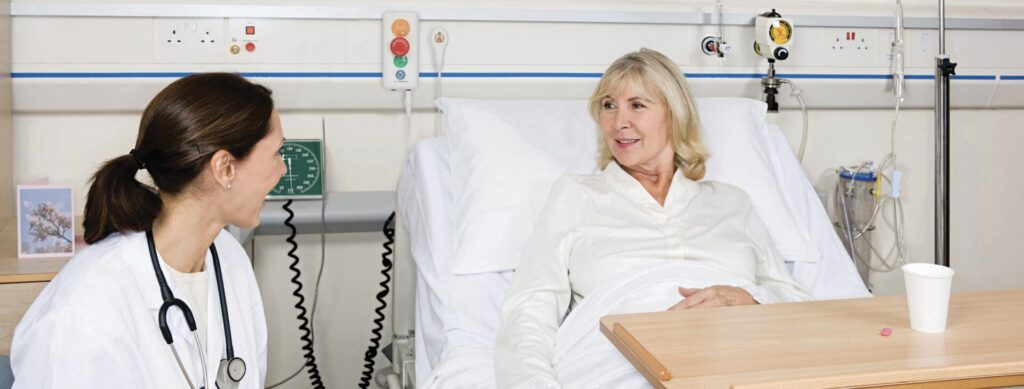
Modern designs of nurse call systems are the perfect example of how a singular piece of healthcare technology can play an important role in meeting regulatory standards, operational targets and patient expectations. A modern nurse call system can support Clinical Governance objectives in several key ways:
Aiding clinical effectiveness overall
Our nurse call systems help healthcare organisations improve their services by enabling faster communication between residents, patients and care teams. With features like mobile alert integration and touchscreen displays, our systems support better coordination across care environments – helping staff deliver timely and more consistent care, and your patients and residents feel more looked after.
Our nurse call systems are also designed to support these evolving requirements by helping hospitals and care homes invest in technology that not only improves patient safety but also future scalability. Our systems are designed to be able to fully integrate with most other types of electronic management systems that you would use within a healthcare environment, while also utilising modern wireless technology across multiple features. This makes it so that, with a Courtney Thorne nurse call system in place, your organisation is always able to scale up technological innovations with minimal disruptions to provide up-to-date, positively evolving care.
Improving Risk Management
Nurse call systems are very useful in helping hospitals and care homes manage risk – especially modern systems that have reliable monitoring and data recording technology. Courtney Thorne systems utilise accessories like staff attack alarms, fall monitoring sensors, and different types of call buttons. These tools help reduce response delays, improve safeguarding procedures (for staff and patients), and support quicker response times during incidents – particularly in high-risk or specialised care settings.
Facilitating Audits
Compliance with key regulations, as set out by the Care Quality Commission (CQC) and the NHS, requires all organisations to demonstrate continuous improvement, effective monitoring, and responsive care procedures. For aiding in audits and quality assessments, our systems provide detailed reporting and event logging capabilities.
By using features like CT Cloud Remote Reporting, your managers and staff can monitor response times, call activity and escalation patterns through cloud-based reporting software. This data helps organisations to identify any trends in data, while also making it much easier to demonstrate compliance with standards. And then, when standards aren’t being met for whatever reason, your organisation will be able to implement evidence-based improvements across all your services.
Aiding Education Efforts
Put simply, the usability of any tools and technology within busy healthcare environments is essential. Our nurse call systems are designed with straightforward interfaces that are incredibly easy for your staff to get to grips with, with consistent system layouts, intuitive controls and clear alert management support smoother onboarding present amongst all our products. What’s more, we offer a variety of resources for those who partner with Courtney Thorne, such as user guides, videos, and a dedicated technical support centre, to make it even easier for you to keep on top of training and education commitments.
Information and IT
Our systems come equipped with multiple digital reporting tools and integrated communication features that help support the NHS’s focus on data-led care delivery. With our solutions, organisations can collect accurate performance data, monitor activity in real time, and strengthen communication across all wards, rooms, and floors.
Staffing and Staff Management
Healthcare organisations are some of the most stressful working environments imaginable, for a wide variety of reasons. Our nurse call systems come equipped with multiple features that aim to make life easier for the staff who need to use them, from the aforementioned staff attack solutions, quality-of-life integrations with other care management systems and smartphones, and multiple access points for data in general. This all means that staff (hopefully) feel safer while working and are wasting as little time as possible on anything but the most important, highest-priority incidents.
Final Thoughts on Meeting NHS Standards
Meeting NHS standards requires healthcare providers to balance patient safety, operational efficiency, regulatory compliance and quality improvement across every aspect of care delivery. The Clinical Governance framework provides the structure for achieving these goals through accountability, continuous improvement and patient-centred care. Its seven pillars, including clinical effectiveness, risk management, audit, staff development and information management, all contribute to maintaining high standards throughout healthcare environments.
By combining reliable communication technology with flexible, scalable systems like our own nurse call systems, healthcare organisations nationwide can improve patient outcomes and operational performance while supporting wider NHS standards and governance requirements.
For organisations looking to improve care quality, strengthen compliance or modernise communication systems, get in touch with Courtney Thorne; our expert team is available to answer any questions about nurse call technology and help identify the right solution for specific healthcare environments.
Written by
Date
29.05.26


Courtney Thorne
C-T Centre
Elliott Road
Bournemouth
United Kingdom
BH11 8JS
Copyright ©2026.
Copyright Courtney Thorne Ltd
Registered in England and Wales. Company No 04319825.
This website has been designed and built by CuCo Creative.