Nurse Call System Alert Colours: Explained
At Courtney Thorne, we’ve been helping hospitals and care homes deliver safer, smarter care for over five decades. As a pioneer in UK nurse call technology, we know that when someone needs help, every second matters – and that clear, instantly recognisable alerts make all the difference. A nurse call system is the silent link between patients, residents, and care staff, sending signals through lights, panels, and mobile devices — alerting staff that help is needed. The colour and tone of that alert communicate the urgency and type of call, helping staff quickly distinguish between routine assistance, urgent help, or an emergency situation.
These colours form a universal visual language within care environments. In this article, we’ll explore what nurse call system alerts are, why they’re important, what the different colours mean, and how Courtney Thorne’s systems make responding faster, safer, and more efficient.
What are Nurse Call System Alerts?
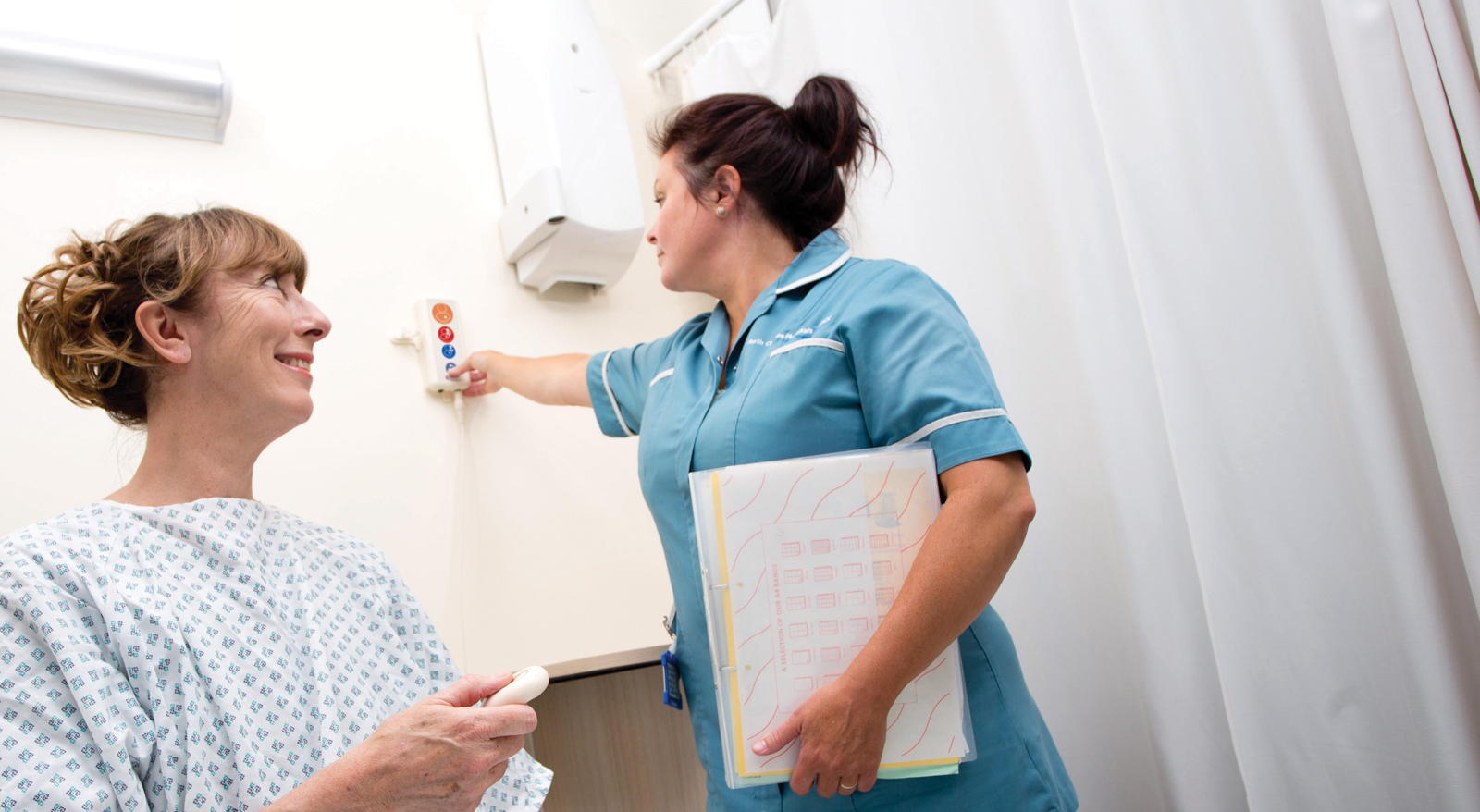
The alert in a nurse call system is the visual or audible (or in the vast majority of systems, both) indicator that is produced by the system when activated. Nurse call systems in care homes, hospitals, and other healthcare environments have myriad ways of being activated, be it a pull cord, the different types of call button, via a piece of wearable healthcare technology, or even fall sensors. When activated in either fashion, some form of an alert is produced to summon the assistance of a nurse or carer. The key elements of a basic nurse call system alert are as follows:
- Activation: A resident or patient presses a call button, pulls a cord or triggers another device (e.g. a fall sensor).
- Logging: A modern nurse call system like the ones here at Courtney Thorne would then log important information about the call, such as the call type, severity, the time the alert was triggered, and more.
- Communication: The nurse call system will then send the alert to your staff, usually via a call point display panel, a pager, or perhaps even through an integrated mobile app like Altra Go.
- Actioning: The alert will stay active in the system until it has been actioned by a relevant staff member.
Why are Nurse Call System Alerts Important?
From our perspective at Courtney Thorne, these alerts are the lifeline of the system: without a clear alert mechanism, staff may not know there is a call, or may mis-prioritise it. Our systems are engineered to ensure that alerts are immediate, visible, audibly distinct and logged for evidence. They are a critical element in the care delivery process for all of the following reasons:
| Reason for Importance | Description |
|---|---|
| Safety | If a call for assistance is missed or delayed, consequences for the individual may be serious. A clear alert helps to make sure that help is summoned and delivered promptly. |
| Efficiency | Alerts coded by type and colour enable staff to prioritise their response sensibly, meaning better allocation of resources and less time being wasted overall. |
| Wellbeing | When alarms are clear and appropriately coded, staff feel more confident. It also reduces alarm fatigue and stress in busy wards or care homes. |
| Compliance | As the HTM 08-03 guidance clearly states, nurse-call systems should be designed to provide clear visual and audible signals, supporting patient and staff safety. |
Nurse Call System Alert Colours and What they Mean
Nurse call system alerts and the colours that often go with them are not officially, universally codified; but there is a recommended set of colours from regulatory bodies in an attempt for there to be a standard for this area of care. The HTM 08-03 regulation states that the following colours are recommended for these medical scenarios:
- Amber: The standard nurse call alert, shown for things like patient call switch presses and over-door indicators.
- Light Grey: Used to indicate when a patient call switch has been reset.
- Green: Used to indicate the presence of a staff member in the patient’s room.
- Red: The standard nurse call alert to signify emergency situations.
- Blue: The standard nurse call alert to specifically signify cardiac emergencies.
- Black: The standard nurse call alert for intruders or instances of staff attack.
- Yellow: Used to indicate when a door has been entered.
- Brown: Used to indicate any faults in equipment.
Within a nurse call system from Courtney Thorne, you will see alert colours being utilised to differentiate between the many types of calls being made via these systems. One example of a system in our range, the Connect Health nurse call system for hospitals, utilises a variety of different alert colours in the following ways:
Red
| Call Type | Colour | Description |
|---|---|---|
| Presence | Green | The Connect Health light will illuminate green when the presence button is pressed, indicating that a member of staff is in the room with the patient. |
| Cardiac | Blue | The Connect Health light will illuminate blue when the button is pressed, indicating that there is a specialist cardiac issue with a patient needing urgent attention. |
| Standard Call | Amber | The Connect Health light will illuminate amber when the button is pressed, with different accompanying tones indicating that the call came from a bathroom or door bell. |
| Emergency | If | The Connect Health light will illuminate red when the button is pressed, indicating that one of a range of issues like urgent medical emergencies or staff attacks needs addressing. |
Why Colour-Coding Nurse Call Alerts Matters
Colour-coding offers a rapid visual cue. In a busy ward or care home corridor, an alert light above the door showing red instantly signals “this is urgent” while green or amber indicates lower priority. This allows staff to function better both physically and mentally, and helps prevent any confusion or delay. As noted in the HTM 08-03 guidance: the device should be easily recognised by its colour (HTM 08-03: 10.30) and avoid confusion between audio/visual signals.
How Courtney Thorne supports Alert Colour-Coding
At Courtney Thorne, our nurse call systems are designed to make colour-coded alerts instantly clear and consistent across every device and display. From Nurse Call Accessories like corridor indicator lights, to touch-screen panels such as our Connect Touch and MicroTouch displays, each call type is presented using familiar, HTM 08-03-aligned colours; amber for standard calls, red for emergencies, blue for cardiac events, and green for staff presence. These visual cues are mirrored across all parts of the system, ensuring staff receive the same priority information wherever they are. Every alert is logged automatically within our CT Cloud reporting and analytics tools, so managers can review response times and call types in detail, supporting audits and continual improvement.
How to Best Implement Call Alert Colours
When deploying or upgrading to a Courtney Thorne system (or any colour-coded nurse call), we recommend the following best practices:
- Map your colour code to your response protocol: Ensure your staff handbook/training aligns what each colour means and what response is required.
- Ensure visibility of indicators: Over-door lights, display panels and mobile alerts should be clearly visible/audible in context (corridor lighting, ambient noise).
- Maintain accessibility: Patient/ resident call-points should be within reach, clearly labelled and back-lit at night. HTM 08-03 emphasises this.
- Train staff on recognition: Make sure all staff (including temporary/agency staff) understand the colour-coding.
- Review analytics: Use our reporting tools (such as CT Cloud) to check whether, for example, red/blue alerts are low/high, response times are acceptable, and whether staff presence (green) calls are being used effectively.
- Tailor to your environment: Because care-homes and hospitals differ (ward layout, staffing, risk profile) you may want customisation of triggers, zoning and alert colour mapping — and our team works with you to achieve that.
Final Thoughts on Nurse Call Alert Colours
To summarise, nurse call system alert colours play an essential role in healthcare and care-home environments. They do far more than flash lights: they communicate priority, guide response, support safety, improve staff efficiency and help with compliance and audit. If you’re a hospital facility manager, ward manager, or care-home operator and you’d like to explore how a colour-coded nurse call system by Courtney Thorne can enhance your care delivery, we encourage you to get in touch. We’re here to answer your questions, provide product insights, and help tailor a system to your environment.
Written by
Date
03.11.25


Courtney Thorne
C-T Centre
Elliott Road
Bournemouth
United Kingdom
BH11 8JS
Copyright ©2026.
Copyright Courtney Thorne Ltd
Registered in England and Wales. Company No 04319825.
This website has been designed and built by CuCo Creative.