How Paging Systems can Upgrade your Care
In today’s healthcare environments, clear and reliable communication isn’t just a convenience – it’s a necessity. With increasing pressures on staff, tighter response time expectations, and the constant requirement to deliver person-centred care, choosing the right communication and healthcare technology can make all the difference. This article defines what paging systems are, how they operate, their benefits, and additional nurse call accessories that can be implemented to further enhance your care environment.
With this article, we at Courtney Thorne hope to dive deep into how paging systems, when integrated within nurse call infrastructure, can elevate care delivery in hospitals and care homes alike, boosting responsiveness, safety, and overall operational efficiency.
What Is a Paging System within a Nurse Call System?
A paging system within a nurse call system refers to an integrated communication tool that alerts staff, typically via handheld devices or overhead systems, when a patient or resident activates a call for assistance. In healthcare settings, these paging elements work in tandem with the core nurse call infrastructure to ensure that alerts reach the right people promptly and reliably.
While traditional nurse call systems simply signal at a nurses’ station, a paging system extends that alert straight into the hands of staff members wherever they are in the building (ward corridors, offices, or communal areas). Devices such as portable pagers or mobiles equipped with call alerts enhance the reach and responsiveness of your nurse call system. By integrating paging into nurse call workflows, healthcare organisations ensure that critical alerts are not missed – even when staff are away from the main desk. This tight integration strengthens communication across your care team and supports improved patient outcomes.
How Do Paging Systems Work?
Paging systems can take many forms, but their underlying principle is to transfer a message or alert generated by a nurse call activation, to one or more receiving devices carried by staff. In essence, a paging system acts as an additional bridge between the call activation and the caregiver, alongside the usual elements like call points and display panels. Having a pager ensures that clear, actionable alerts are delivered regardless of a staff member’s location or current activity, and they are overall a smart, simple addition to any call system.
Some of the core components of a Paging-Enabled Nurse Call System include the following:
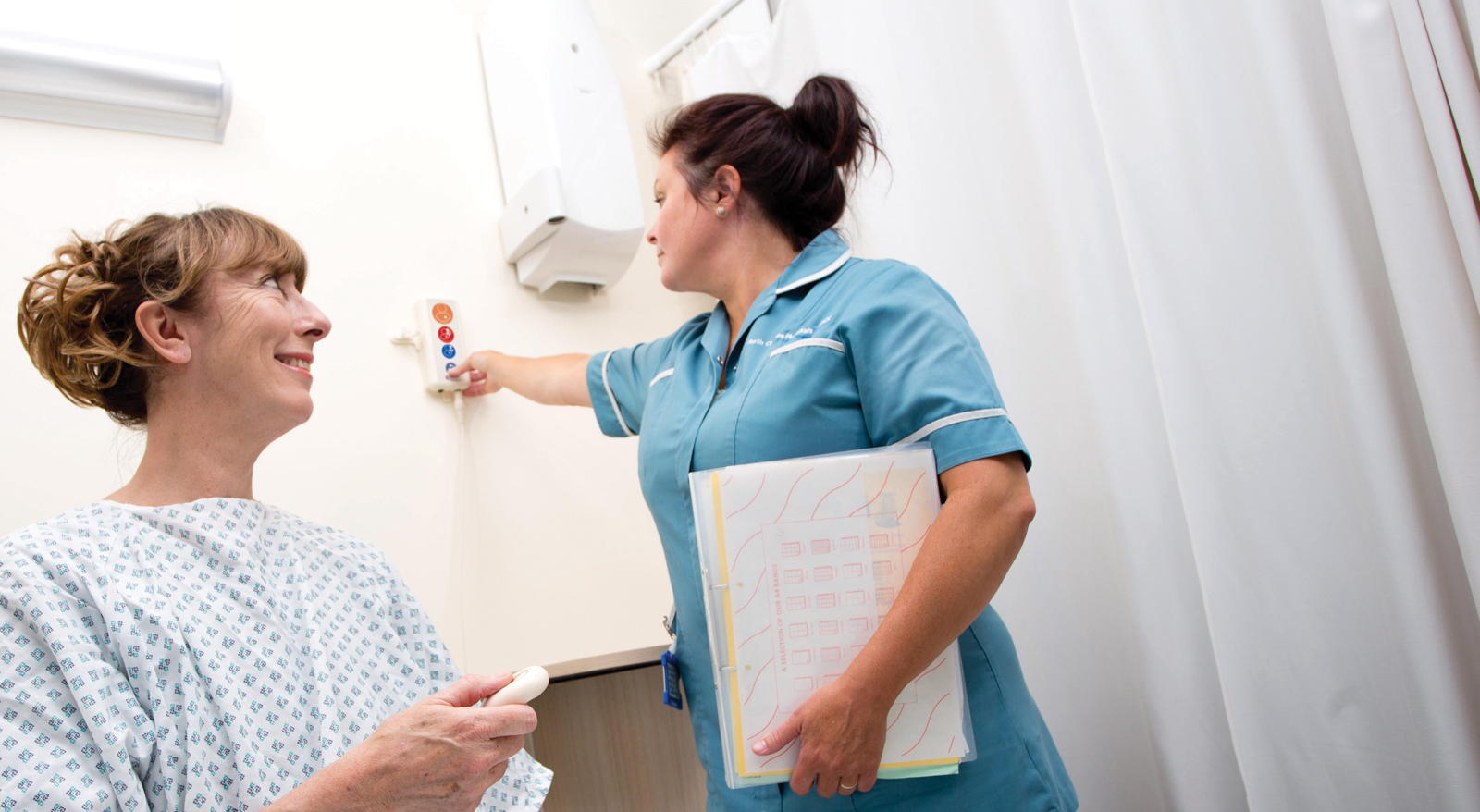
- Input Devices: These include bedside call points, pull cords, wearable pendants, or dedicated transmitters (see below). When triggered, these devices send a signal into the system indicating a request for assistance. When used with a Paging system, your call alerts will be sent to a dedicated pager as well as to display panels, providing nurses with individual access to alerts and the ability to better manage their tasks.
- Paging Transmitters: Our transmitters are part of the Paging System, and as the name suggests, their job is to retransmit all alerts to the Pagers. They are compatible with both the pagers themselves, and our range of Touchscreen and Display Panels.
- Receiving Devices: These are the actual tools that staff carry to receive the alert. They could be traditional handheld pagers, smartphones with integrated nurse call apps, or even landline phones with messaging capabilities. Our dedicated pagers come with useful features like dual-line notification screens and colour-coded alerts.
- Paging Accessories: As well as the technical and mechanical devices that make up the paging systems, we can also offer a variety of spare accessories to complement your nurse call systems paging capabilities. These include things like holsters, battery covers, and rubber boots to protect the pagers from unnecessary damage.
What Are the Benefits of Paging Systems?
Paging systems offer a range of advantages that directly support better care delivery across both hospitals and care homes:
| Paging System Benefit | Description |
|---|---|
| Faster Staff Response Times | Pager-enabled alerts reduce the response time of caregivers when answering calls. Rather than needing to be physically present at a call point to see an alert, staff receive notifications instantly on their pager – wherever they are in the facility. |
| Enhanced Workflow Efficiency | By distributing alerts directly to frontline carers, paging systems eliminate unnecessary walking to and from the call points just to check for new alerts. Because of this, staff can better prioritise their actions and resources more effectively throughout their shift. |
| Reliable Communications | Dedicated paging systems use specialised frequencies and protocols to provide reliable signal integrity – even when networks are backed up. |
| Improved Staff Awareness | Paging systems can be configured to target specific roles in your team, ensuring the right person is alerted first. Sophisticated nurse call integrations also help track who has registered and responded to an alert, encouraging better accountability amongst staff. |
| Increased Patient Safety | Knowing that help is only the press of a call button away can give patients and residents greater peace of mind. This psychological benefit, often overlooked, contributes to a calmer, more secure care environment overall. |
What Other Accessories Can I Implement in My Nurse Call System?
Creating a responsive and adaptable care environment goes beyond just a nurse call panel and pager devices. The best nurse call systems make use of a wide range of nurse call accessories that can effectively enhance safety, communication, and care quality. By selecting the right mix of nurse call accessories for your system, many of which can be tailored to your specific location’s layouts and needs, you can build a comprehensive ecosystem that supports both safety and operational goals. The following are some excellent examples of popular nurse call accessories that we can offer as part of your system.
- Wearable Call Devices: Portable emergency call alarms fulfil a similar role as pagers, but from the patient’s perspective. They allow patients or residents to summon help from anywhere in a room, and are especially valuable in care homes or assisted living environments where mobility varies widely.
- Triggers & Sensors: These accessories help detect movement or a lack thereof, providing alerts if someone attempts to get up unsupervised – a key safeguard against falls and unexpected emergencies. Alerts can also be routed to pagers or staff devices, allowing for a system that knits all of its parts and functions together smoothly.
- CT Cloud and Mobile Apps: Cloud-based reporting, like from our CT Cloud, and mobile apps like our own Altra Go, give carers the power to receive nurse call alerts and information on Android devices. They can view urgent calls, understand their location and severity, and act without needing to be tied to fixed displays.
- Staff Attack Solutions: These are personal duress alarms and discreet alert devices, designed to improve the safety of your staff and protect them from uncomfortable situations. This is a critical consideration for many care providers, particularly in environments where aggression or unexpected incidents may occur.
Paging Systems in Action
In both hospital wards and residential care settings, paging systems extend the reach of communication in ways that traditional nurse call stations can’t. Whether it’s alerting a nurse on rounds, supporting care staff across a large dementia care wing, or providing rapid notification of critical alarms, paging systems help ensure calls for assistance are rarely missed and also better managed and dealt with.
Best-in-class nurse call solutions, such as the ones we provide here at Courtney Thorne, come with the option to integrate paging and alert delivery across devices and platforms, bridging the gap between the call point and the caregiver’s hand. Combined with wireless technologies and cloud-connected accessories, these systems will definitively transform how your team communicates and responds to call alerts and emergency situations.
Final Thoughts on Paging Systems
Paging systems, particularly when integrated within a modern nurse call infrastructure, offer hospitals and care homes a powerful way to improve responsiveness, streamline workflows, and enhance patient and resident safety. By ensuring that alerts reach the right staff at the right time, and by pairing those alerts with smart devices and analytics, organisations can deliver both more efficient and more compassionate care.
From bedside call buttons to wearable pendants, staff pagers to cloud-based reporting tools, the accessories available today allow care operators to tailor a communication network that meets their unique needs. And with trusted nurse call providers like Courtney Thorne, you benefit from decades of expertise and innovative solutions designed specifically for UK healthcare environments.
If you’re exploring ways to upgrade your care communication systems, or if you have questions about nurse call systems and how paging systems could be implemented in your facility, don’t hesitate to get in touch with Courtney Thorne. Their team can help guide you through options, tailor solutions to your setting, and support you in delivering better care through smarter communication.
Written by
Date
05.01.26


Courtney Thorne
C-T Centre
Elliott Road
Bournemouth
United Kingdom
BH11 8JS
Copyright ©2026.
Copyright Courtney Thorne Ltd
Registered in England and Wales. Company No 04319825.
This website has been designed and built by CuCo Creative.